
Description
Intuitive Sample Navigation And Confident Analysis Area Identification
- The unique scanning X-ray microprobe allows SEM like navigation with point-and-click control
- X-ray induced secondary electron imaging (SXI) provides perfect correlation between imaged areas and spectroscopy
Optimized Depth Profiling
- Multiple ion gun options (monatomic Ar, C60, argon cluster GCIB) for a variety of organic, inorganic, and mixed materials
- Full 5-axis stage functionality including rotation/tilt and heating/cooling during sputtering
- Multipoint profiling within a single sputter crater for on/off defect analysis and precious samples
- Adjustable solid collection angle for improved angular resolution for Angle Resolved analysis with advanced software for high-throughput film structure analysis
Superior Micro-Area Analysis
- Highest small area sensitivity on the market
- <10 microns microprobe size in x and y
- Image registration for unattended automated micro-area analysis
Suite Of Specialized Solutions For In Situ Characterization Of Advanced Materials
- Electronic band structure of organic and inorganic materials using UPS, LEIPS, REELS measurement from the same sample location
- Electrochemical (biasing, polarization studies) experiments
- Inert sample transfer vessel
- Fully integrated high energy and high spatial resolution Auger Spectroscopy with elemental mapping at the exact location of interest as XPS
Scanning XPS Microprobe Surface Analysis & Morphology
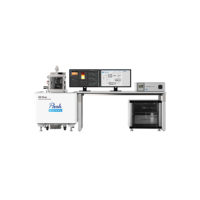
Scanning XPS Microprobe PHI Versa Probe 4